
 Kova Center 92G-92H Nguyen Huu Canh Str, Ward 22, Binh Thanh Dist, HCMC
 +84 932 859 976
IATA: Aviation Generates $29.7 Billion for Greece’s Economy
- 21 November, 25
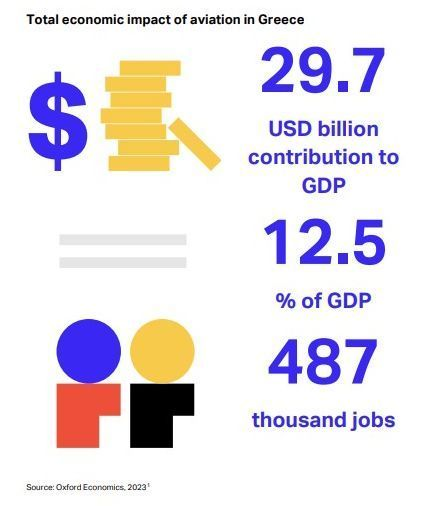
Aviation contributes USD 29.7 billion to Greece’s GDP – equal to 12.5 percent of the national economy – and supports nearly half a million jobs, according to a new report by the International Air Transport Association (IATA).
The report, “The Value of Air Transport to Greece”, highlights the strategic role of aviation in driving national growth, tourism and trade.
According to the data, the sector directly employs 37,100 people and generates USD 3.5 billion in economic output, or 1.5 percent of Greece’s GDP. When accounting for indirect, induced and tourism-related effects, air transport supports a total of 487,400 jobs across the country.
Tourism and wider economic benefits
The report shows that tourism supported by aviation contributes USD 20.9 billion to Greece’s GDP and sustains 370,900 jobs, making it one of the most significant sources of employment. International visitors traveling by air spend an estimated USD 24.1 billion annually in Greece on goods and services, underscoring the importance of connectivity to local economies nationwide.
Connectivity and growth
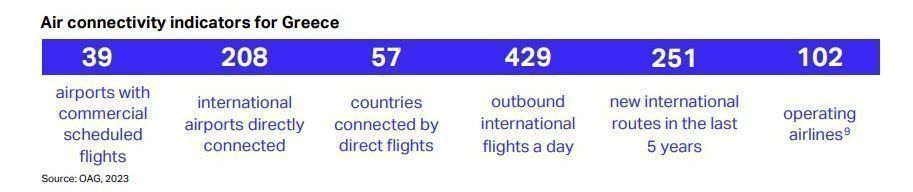
Greece’s aviation network continues to expand rapidly, reinforcing its position as a major European and Mediterranean hub. The country today counts 39 airports with scheduled commercial flights, connecting to 208 international destinations in 57 countries. There are approximately 429 outbound international flights daily, operated by 251 airlines.
Since 2014, Greece’s international air connectivity index has increased by 90 percent within Europe and an impressive 301 percent with other regions, according to IATA data. This enhanced global reach has strengthened the country’s competitiveness and tourism resilience.
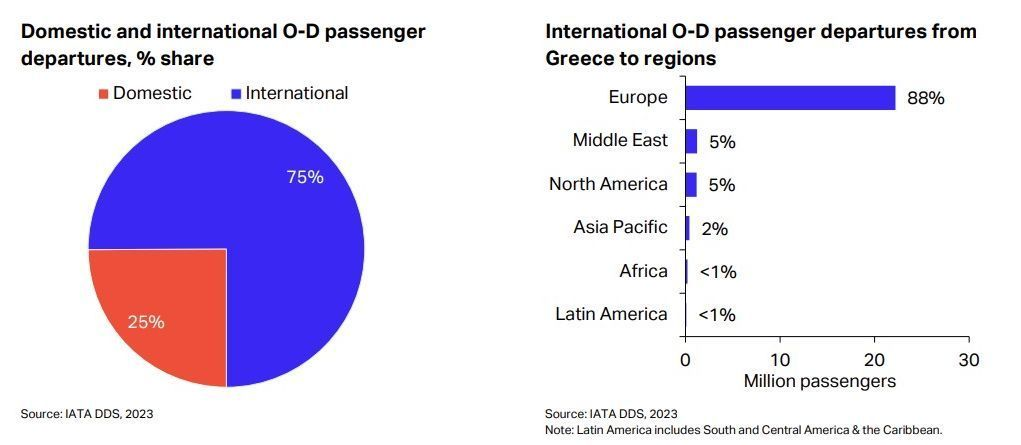
In 2023, international flights accounted for 75 percent of total air departures, with 25.3 million passengers traveling abroad. Europe remains the dominant market, representing 88 percent of international traffic, with London, Paris and Tel Aviv among the most popular destinations.
Trade, accessibility and social impact
Beyond tourism, air transport also facilitates trade and innovation. Greek airports handled 100,900 tonnes of air cargo in 2023, supporting both import and export flows.
IATA’s report also notes that aviation enhances social mobility and accessibility – the average Greek needs to work 2.5 days to afford a plane ticket, reflecting broader affordability and inclusion.
Air transport in Greece contributes to several United Nations Sustainable Development Goals (SDGs), providing access to education, connecting communities and enabling economic participation even in remote regions.
Commenting on the findings, Robert Chad, IATA’s Area Manager for France, Belgium, the Netherlands, and Southern Europe, said: “Let’s build a future where aviation remains a force for growth – without leaving a negative footprint.”
As Greece continues to invest in infrastructure and sustainable practices, the IATA report positions aviation not just as a means of travel, but as a cornerstone of national prosperity and long-term economic resilience.
Cre: Greek Travel Pages












 hello@mercan.com